

How to Guided Meditation Helps with Insomnia
Have you ever stared at the ceiling, unable to fall asleep, while your mind races with endless thoughts? You’re not alone. Millions struggle with sleepless nights caused by stress, anxiety, or overthinking. But what if you could calm your mind naturally—without pills or side effects?
That’s where guided meditation for sleep comes in. It’s a simple yet powerful way to relax your body, quiet your thoughts, and drift into deep, peaceful rest.
In this article, we’ll explore how guided meditation can help you overcome insomnia, improve sleep quality, and transform your nightly routine into a moment of calm and healing.
What Is Guided Meditation for Sleep?
Guided meditation for sleep is a calming audio or spoken practice that helps your mind let go of stress and prepare for rest. A soothing voice gently guides you through breathing exercises, body scans, or visualization techniques to slow your thoughts.
Unlike regular meditation, guided sessions provide structure. You simply listen and follow along. No experience is needed.
These sessions can range from short Quick sleep meditation audios to longer ones designed to ease you into meditation for deep sleep.
When practiced regularly, guided meditation helps reset your body’s natural meditation for sleep rhythm.
The Connection Between the Mind and Sleep

Insomnia often begins in the mind. Stressful thoughts, emotional strain, or a busy schedule make it hard for the brain to shut down at night.
When your mind is active, your body stays alert. The heart rate increases, muscles tighten, and the stress hormone cortisol rises. This makes falling asleep even harder.
Guided meditation for sleep helps reverse this process. It lowers stress, slows your breathing, and activates the body’s relaxation response. Over time, this helps your brain associate bedtime with peace instead of anxiety.
That’s why Sleep guided meditation for insomnia is becoming one of the most trusted natural remedies worldwide.
How Guided Meditation Helps with Insomnia
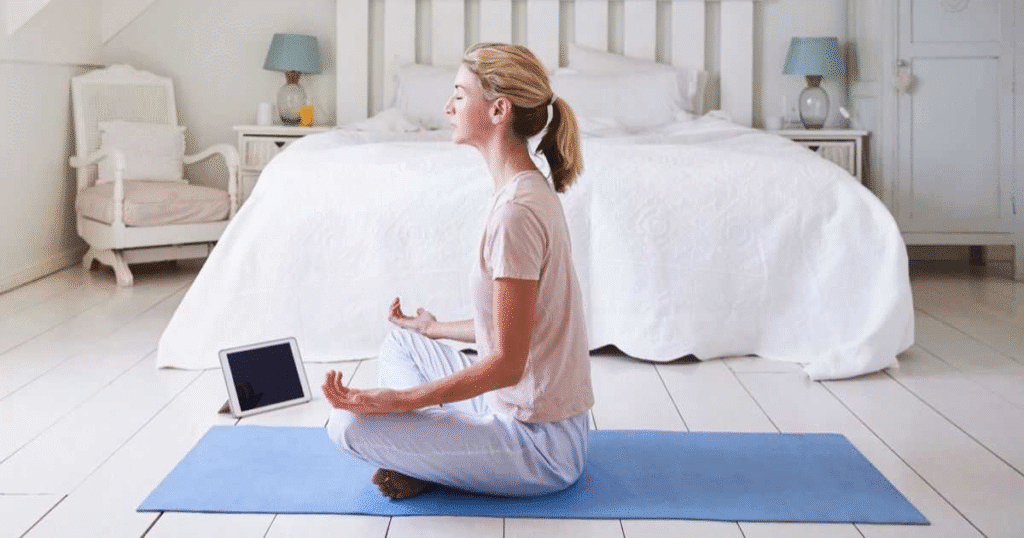
Guided meditation for sleep works in several ways to improve sleep. It doesn’t just make you sleepy—it actually helps your body and mind learn how to relax naturally again.
Here’s how:
1. Calms the Mind
A restless mind is the primary reason many people struggle to sleep. Bedtime guided meditation uses gentle voice cues to redirect your attention away from racing thoughts. It teaches your brain to focus on calm imagery, like waves or soft light.
As your focus shifts, mental noise fades, and your mind becomes quiet enough to allow you to fall asleep.
2. Relaxes the Body
Many Meditation for insomnia sessions include body scans—slowly focusing on each body part from head to toe. This practice releases built-up tension in muscles and promotes relaxation.
It signals your nervous system that it’s safe to rest.
3. Reduces Stress and Anxiety
Stress keeps your body in a state of alertness.Nighttime meditation for sleep lowers heart rate and cortisol levels. This transition from “fight or flight” to “rest and digest” gets you ready for a good night’s sleep.
4. Builds a Sleep Routine
When done every night, guided meditation for sleep becomes a cue for your body that it’s time to rest. Your brain learns to associate the sound of the guide’s voice with sleepiness.
This routine strengthens your sleep pattern and reduces insomnia over time.
5. Improves Sleep Quality
People who meditate regularly report not just faster sleep onset but also better Relaxing guided meditation depth.Deep sleep guided meditation helps increase the amount of time spent in restorative sleep stages.
You wake up feeling more refreshed and less groggy.
The Science Behind Meditation and Sleep
Scientific studies support the use of Sleep mindfulness meditation for better sleep. Research from the Journal of the American Medical Association found that mindfulness meditation improved sleep quality and reduced insomnia symptoms in adults.
Guided meditation for sleep increases melatonin (the sleep hormone) and decreases stress-related brain activity. It also slows brain waves to levels similar to those seen in deep sleep.
In simple terms, it teaches your brain how to rest again.
Regular meditation for insomnia trains the mind to handle stress better and creates long-lasting calmness, even during the day.
Benefits of Guided Meditation for Sleep

Here are some of the top benefits people experience from using guided meditation for sleep to fight insomnia:
1. Natural Sleep Aid
No pills. No chemicals. Just your breath and focus.Guided meditation for sleep offers a drug-free way to sleep better.
2. Reduces Nighttime Anxiety
If anxiety peaks at night, guided meditation for sleep helps you manage it gently by bringing your focus to the present moment.
3. Boosts Emotional Health
Better sleep leads to better mood and energy during the day. Over time, your overall mental well-being improves.
4. Increases Mind-Body Awareness
guided meditation for sleep connects your physical and emotional states. You become more aware of how your thoughts affect your sleep and health.
5. Can Be Done Anywhere
Whether you’re at home or traveling, you can practice 10-minute sleep meditation sessions with an app or online audio.
How to Practice Guided Meditation for Sleep

Starting is simple. You don’t need any special equipment—just a quiet space and a few minutes before bed.
Follow these steps:
Step 1: Find a Comfortable Spot
Lie down on your bed or sit comfortably. Make sure your room is dark and peaceful.
Step 2: Play a Guided Meditation
Choose a session focused on meditation for insomnia or Relaxation meditation for sleep Many apps and YouTube channels offer free audio.
Step 3: Follow the Voice
Close your eyes and listen. Let the guide lead you through breathing or body relaxation exercises.
Step 4: Focus on Your Breath
Slow, deep breaths help relax your body. If your mind wanders, gently bring it back to your breathing or the guide’s words.
Step 5: Let Go
Trying to sleep forcibly is a poor idea that will most likely result in the opposite. Your main objective should be none other than to relax. For a lot of people, falling asleep before the completion of the session happens naturally.
Tip: A good way to get used to sleep meditation is by doing it for 10 minutes at a time and progressively extending the period.
Tips for Getting the Most Out of Guided Meditation
Keep up the practice – Do it every night, even on the nights when you are not able to sleep right away.
Put on Headphones – It’s easier to concentrate on the speaker when you shield your ears and eyes from the outside world.
Don’t Look at Your Screen Before Going to Bed – The blue light emitted from phone displays interferes with the production of melatonin.
Experiment with Different Voices – Find one that gives you comfort.
Concentrate on Your Breath – Calm breathing will reinforce your relaxation.
The habit of meditation will become for your brain a sleep sign that it is time to go to bed.
Best Time to Use Guided Meditation
Though the evening is the best time to do it, guided meditation may also be carried out after work or in moments of tension.
In the case of persistent insomnia, it is advisable to have a meditation session in the early evening as it will signal the body to move from a state of alertness to one of calmness in preparation for sleep.
Some people also find it helpful to do the Guided sleep meditation in the middle of the day as a quick getaway from the mind noise..
Combining Meditation with Lifestyle Changes

An instance of using guided meditation for sleep for good and sound rest should be considered as an addition of small practical and healthy behavioral habits, for example sleeping at a regular time, avoiding caffeine consumption after 3 PM, moderate daily exercise, not eating heavy and fatty food just before going to bed and having a clean, cool and quiet air-conditioned room for sleeping. Don’t you think that if the setting is appropriate for relaxation, meditation will definitely be more effective?
Common Mistakes to Avoid
Most beginners immediately stop as they cannot get results right away. Be aware that guided meditation is a form of training. It requires quite a bit of patience before your body and mind can get used to it.
Several errors that one can commit when starting this type of practice are:
Expecting Instant Results: Improvement of the skill is a process that takes time.
Multitasking During Meditation: It should be the only thing that occupies your mind.
Not Practicing Regularly: The sticking point for insomnia is following a schedule.
Overthinking: Just relax and enable the meditation to perform its function.
If you keep on practicing and have patience, you will realize the benefits of your sleep pattern.
Real-Life Impact: Stories of Better Sleep

People from various corners of the world have attested to the effectiveness of guided meditation for sleep as a wonderful sleep aid. A college student accomplished the use of 10 Guided sleep meditationto handle exam nervy and later on to sleep without drugs. A mother, who was in a difficult situation because of anxiety, became calm through meditation before sleeping and then had a deep sleep. Their stories are one of the strongest proofs that guided meditation for sleep is not just a spiritual path but also a practical one, and it has the potential to turn the tide of people’s lives.
Conclusion
Insomnia inevitably leads to a long and stressful night. Still, one should not allow a compromised guided sleep meditation to haunt his entire life. guided meditation for sleepby comforting both the body and mind and reducing the tension, will aid your rewiring process for better sleep. The thing is to find out whether it is deep sleep meditation, meditation for insomnia, or just a short 10-minute sleep meditation that best fits your requirement and to keep it consistent. A while later, by making meditation your nightly ritual, sleep will turn from being a struggle into a soothing and comforting one. A peaceful brain is one ready for sleep and a sleep brain is the key to a better life.
FAQs
1. Does guided meditation really help with insomnia?
Yes, it helps your body relax and quiets your thoughts, making it easier to fall and stay asleep naturally.
2. How long should I meditate before bed?
Start with 10-minute sleep meditation sessions and increase as needed. Even short sessions can improve sleep quality.
3. Is meditation for insomnia safe to do every night?
Absolutely. It’s a natural, non-invasive practice that can be done nightly without side effects.
4. Can I use Sleep meditation techniques even if I don’t have insomnia?
Yes! It’s great for anyone who wants better sleep and relaxation before bed.
5. When will I notice results?
Many people feel calmer after the first few sessions, but steady results appear with daily practice over a few weeks.
0 Comments